
Constructor X
March 11, 2026
A guide for homeowners who want their beds looking sharp without wrecking their weekend.
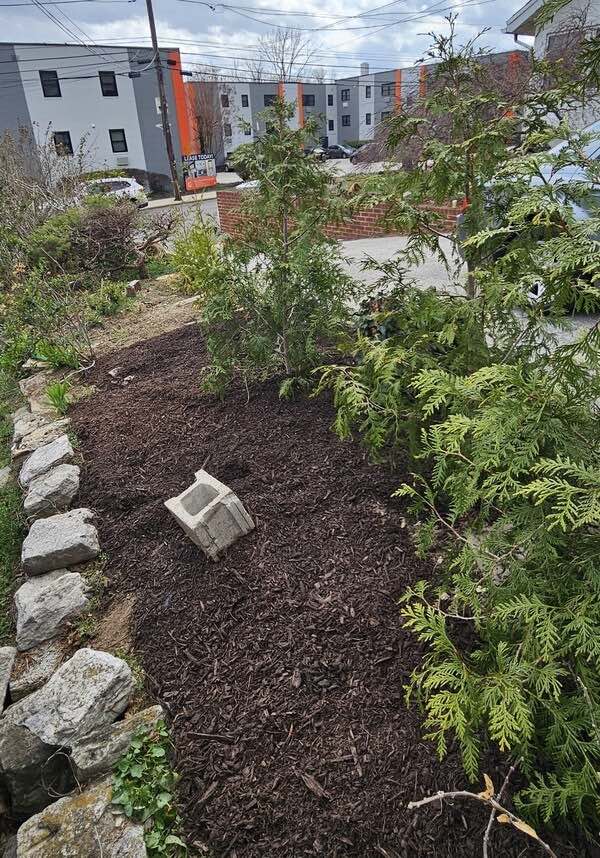
Every April, the same thing happens. Homeowners look out at their landscape beds and see faded, thin, weed-pocked mulch that's broken down over the winter. They know it needs to be refreshed. They just aren't sure how much to get, what kind to buy, or whether it's worth doing themselves or calling a landscaper.
This post answers all of it. We'll walk through what mulch actually does for your yard, how to choose the right type, how to calculate how much you need, and why a lot of homeowners who start out planning to DIY end up calling us anyway.
Most people think of mulch as decorative — something that makes your beds look tidy and finished. And it does do that. But the functional benefits are what make professional mulch installation one of the highest-return services in landscaping.
Moisture retention. A properly applied layer of mulch reduces soil moisture evaporation by up to 70%. That means less watering, less stress on your plants during dry stretches, and lower water bills over the course of a summer.
Weed suppression. A 3-inch layer of mulch blocks sunlight from reaching the soil surface, which prevents the vast majority of weed seeds from germinating. This is the single biggest reason to keep your mulch fresh — old, thin mulch that's broken down to an inch or less is basically a weed welcome mat.
Soil temperature regulation. Mulch insulates your soil — keeping it cooler in summer heat and protecting root systems from hard freezes in winter. This is especially important for shrubs and perennials that are still establishing themselves.
Soil health. As organic mulch breaks down, it adds nutrients back into the soil and improves its structure over time. Beds that have been consistently mulched for several years develop richer, looser topsoil that supports healthier plant growth.
Erosion control. In Philadelphia-area yards where rain can be heavy and soils are often compacted, mulch breaks the impact of rainfall and holds soil in place on slopes and around foundation plantings.
Not all mulch is the same, and the choice matters more than most homeowners realize.
The most popular choice for residential beds in the Philadelphia area. It knits together as it settles, stays in place well during rain, breaks down slowly, and has a clean, natural appearance. It's the right call for most foundation plantings, shrub beds, and mixed perennial borders. This is what we install on the majority of our residential projects.
A finer-textured version of shredded hardwood. It breaks down faster, which means better soil improvement over time — but it also means you'll be refreshing it more often. Good for established beds where soil health is the priority.
The color holds longer than natural mulch because the dye resists fading. It looks sharp right after installation and maintains that look through the season. Quality varies significantly by supplier — low-quality dyed mulch can be made from waste wood and construction debris rather than hardwood. We only source dyed mulch from reputable suppliers when clients request it.
Naturally insect-repellent and slow to break down. A good choice around plants that are susceptible to pests or in beds where you want to minimize replacement frequency. It costs more, but in the right application it earns it.
Not organic, doesn't improve soil health, and can be a pain to maintain if you ever change your plantings. That said, it's permanent, virtually maintenance-free, and the right aesthetic choice for certain landscapes — particularly drought-tolerant plantings, modern design schemes, or high-foot-traffic areas where organic mulch would scatter.
Mulch is sold by the cubic yard. Here's how to figure out what you need without a calculator:
Step 1: Measure the square footage of your beds. Length × width for rectangles. For irregular shapes, break them into rough rectangles, calculate each, and add them up. Don't stress about being perfect — you're estimating, not engineering.
Step 2: Decide your target depth. For a fresh installation or beds that are mostly bare, you want 3 inches. For a refresh on top of existing mulch, 1.5 to 2 inches is usually enough to bring it back to the right depth without over-mulching.
Step 3: Use this formula:
Square footage × depth in inches ÷ 324 = cubic yards needed
So if you have 800 square feet of beds and you're doing a fresh 3-inch install:
800 × 3 ÷ 324 = 7.4 cubic yards
Round up to the nearest half yard. It's always better to have a little extra than to come up short mid-install.
A note on depth: More is not better. Mulch piled 4, 5, or 6 inches deep — especially when it's volcano-mulched up against tree trunks and shrub stems — traps moisture against bark, promotes rot, and can kill mature trees over time. Three inches is the sweet spot. We see over-mulched plants all the time, and it's one of the most common ways well-intentioned homeowners accidentally damage their own landscaping.
If you drive around any neighborhood in the Philadelphia area in spring, you'll see it everywhere: mulch piled up in a cone shape around the base of trees, sometimes 8 or 10 inches deep right at the trunk. Landscapers do it, homeowners do it, and it's been happening for so long that a lot of people think it's the correct way to mulch a tree.
It isn't. It's one of the most harmful things you can do to a mature tree.
Mulch piled against bark keeps it constantly moist, creating ideal conditions for fungal disease and rot. It encourages roots to grow upward into the mulch rather than down into the soil, which destabilizes the tree over time. And it attracts rodents — mice and voles that nest in the warm mulch pile and gnaw on bark through winter.
The right way: keep mulch pulled back 2 to 3 inches from any trunk or stem, and maintain a flat, even layer out to the drip line. We train our crew on this on every job. It matters.
Spring is the most popular time to mulch, and for good reason. Installing in late April or early May — after the soil has had a chance to warm up from winter — gives you weed suppression right when weed seeds are starting to germinate, locks in soil moisture heading into summer, and has your beds looking their best for the season.
Fall mulching is underutilized and underrated. A fresh layer in October or November insulates roots before the first freeze, protects newly planted shrubs and perennials through their first winter, and means your beds go into spring already covered — so you're refreshing rather than starting from scratch.
What to avoid: Mulching too early in spring, before the soil warms, can keep the ground cold longer and slow plant emergence. And mulching right before a heavy rain on bare soil can mat the surface and cause runoff rather than absorption.
Here's the honest answer: mulching is physically demanding, logistically awkward, and time-consuming in a way that surprises a lot of people who've never done a full property before.
Bags from a home improvement store are convenient but expensive at scale. A cubic yard of mulch — which covers about 100 square feet at 3 inches deep — runs $45 to $65 delivered in bulk. That same volume in bags costs two to three times as much and requires you to haul and carry dozens of bags. For a property with 1,000 square feet of beds, you're looking at carrying and opening 80 to 100 bags if you go that route.
Bulk mulch delivery solves the cost problem but creates a new one: you now have a large pile of mulch in your driveway that needs to be wheelbarrowed, distributed, and raked — often across multiple beds, around dozens of plants, through gates, and up slopes. On a large property, this is a full day of hard physical labor for two people.
The case for hiring a landscaper for mulch installation:
The job gets done in a fraction of the time. A professional crew with the right tools and process can complete in two hours what takes a homeowner all day. We handle the delivery coordination, the spreading, the edging, the cleanup, and the detail work around plants. You don't lift a bag. Your beds look professionally finished when we're done — clean edges, consistent depth, mulch pulled back from stems the right amount.
And because we buy in bulk at volume, our material cost is lower than what you'd pay at a hardware store. When you factor in your time, your labor, and the cost of retail bags, professional installation often costs less than you'd expect — and sometimes less than doing it yourself.
Here's what our mulch service includes on every job:
We start by edging all the beds before the mulch goes down. Clean, sharp edges are what give professionally mulched beds their finished look — and they prevent grass from creeping back into the beds over the season. Any existing weeds are pulled before the new mulch is applied. We don't bury them and hope for the best.
We apply mulch at a consistent 3-inch depth throughout, using rakes and hand tools to get even coverage around plants, under shrubs, and into corners. Mulch is pulled back from all trunks and stems. No volcano mulching, ever.
We clean up as we go. When we're done, your beds are finished and your driveway, walkways, and lawn are clean. No piles left behind, no mess.
We're transparent on material and labor costs before we start. You'll know exactly what you're paying for.
Once a year is the standard recommendation for organic mulch. Most homeowners do a spring refresh and find that keeps their beds looking good and functioning well year-round. If you mulched heavily in spring, a light touch-up in fall may be all you need.
Yes, as long as the existing mulch layer isn't already too deep. Check the depth before adding more. If you're already sitting at 2.5 to 3 inches, you don't need to add more right now. If it's broken down to an inch or less, a fresh 2-inch layer will bring you back to the right depth.
This is a common concern, and the honest answer is: it can, if mulch is piled against your foundation or wood siding. The solution is simple — maintain a 6-inch gap between any mulch and your foundation, and never pile mulch against wood structures. Organic mulch itself doesn't attract termites the way untreated wood does, but it can provide cover for them to move through. Keep the gap and you eliminate the risk.
Natural hardwood brown is the most versatile and looks best as it ages, developing a weathered, natural tone that blends with almost any landscape style. Black dyed mulch is striking when fresh and popular in more contemporary landscapes. Red is polarizing — it works in some settings and looks harsh in others. We're happy to walk through options with you based on your plantings and house color.
We do, but we're selective about recommending it. Woven weed barrier fabric can be effective in certain applications — particularly under stone mulch or in beds where you won't be changing plantings. Under organic mulch in planted beds, it tends to create more problems over time than it solves: roots can't move freely through it, it degrades unevenly, and weeds eventually grow in the mulch layer on top of it anyway. A well-maintained 3-inch mulch layer does a better job of suppressing weeds than fabric under shallow mulch.
If you're in Philadelphia or the surrounding area and you want your beds looking clean, healthy, and professionally finished — without spending your Saturday doing it yourself — give QuinnCo Landscaping a call. We'll take a look at your property, give you a straightforward estimate, and get it done right.
QuinnCo Landscaping serves Philadelphia and surrounding communities. Contact us for a free mulch installation estimate.
Eu tincidunt tortor aliquam nulla facilisi. Aenean sed adipiscing diam donec adipiscing. Ut lectus arcu bibendum at varius vel pharetra.